
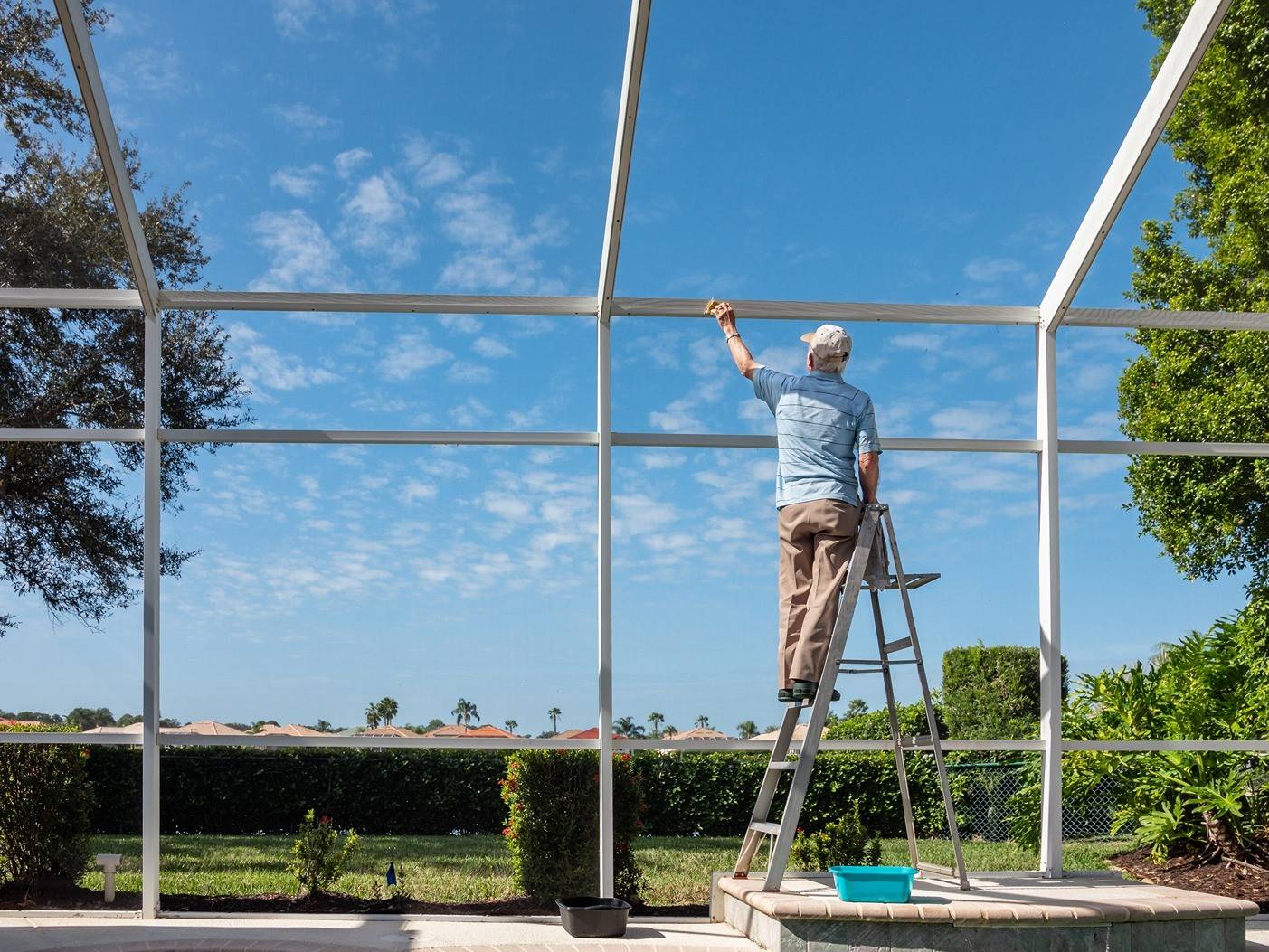
When a screen tears or a fastener comes loose, it’s tempting to tackle the repair yourself. While some minor maintenance is manageable, many DIY pool cage repairs end up costing more because they overlook structural issues or use materials that aren’t designed for Florida’s climate.
Being aware of DIY pool cage repair risks can help homeowners avoid accidental damage, safety issues, and repair costs that add up over time.
Common DIY Mistakes
Most DIY repair problems start with good intentions. The homeowner sees a damaged area, buys supplies, and tries to patch the issue before it gets worse. The trouble is that pool cages are connected systems. The screen, frame, fasteners, anchors, doors, and roof sections all affect how the enclosure performs.
Common pool enclosure repair mistakes include:
- Using the wrong screen material
- Pulling screen too tightly or unevenly
- Reusing old or corroded fasteners
- Overlooking loose anchors or weak connection points
- Patching a damaged area without checking the surrounding frame
- Misaligning doors or panels
- Using hardware that is not suited for Florida weather
A repair may look fine at first, but if the underlying issue is still there, the same area may fail again.
Hidden Costs of DIY Repairs
DIY repairs often feel cheaper because the first trip to the hardware store is usually small. The real cost shows up later if the repair does not hold.
Homeowners may end up paying for:
- Extra materials after the first repair fails
- Tools they may only use once
- Replacement screen after uneven tension causes tearing
- Additional hardware to fix missed damage
- Professional repairs after the problem gets worse
- More extensive work if water, wind, or movement affects the frame
There is also the cost of time. What looks like a quick Saturday project can turn into several weekends of trial and error, especially on taller cages or hard-to-reach roof sections.
Safety Risks
Pool cage repairs can involve ladders, overhead work, sharp metal edges, and unstable sections of framing. Even a small repair can become risky if the damaged area is high, loose, or difficult to access.
Safety concerns may include:
- Falls from ladders
- Cuts from aluminum or screen tools
- Strain from working overhead
- Loose frame sections shifting during repair
- Electrical or lighting components near the enclosure
- Damage caused by stepping or leaning on the wrong area
When to Call a Professional
Cleaning your enclosure, washing screens, or tightening easily accessible hardware may be reasonable maintenance tasks. Structural repairs, storm damage, and large rescreening projects typically require professional evaluation.
It may be time to call for professional pool cage repair if you notice:
- Screen panels tearing in the same place
- Rusted or missing fasteners
- Loose anchors
- Bent or shifted frame sections
- Doors that no longer close correctly
- Sagging roof panels
- Damage after heavy wind or storms
A professional can identify whether the issue is only cosmetic or part of a larger problem. That helps you spend money on the right repair instead of chasing the same issue over and over.
Skip the DIY Risks: Contact Absolute Aluminum for Professional Results
Your pool cage protects one of the most used areas of your home. If it needs repair, Absolute Aluminum can inspect the enclosure, explain what is happening, and recommend the right next step.
Skip the guesswork and contact Absolute Aluminum today for pool cage repair done with the right materials, tools, and experience.