
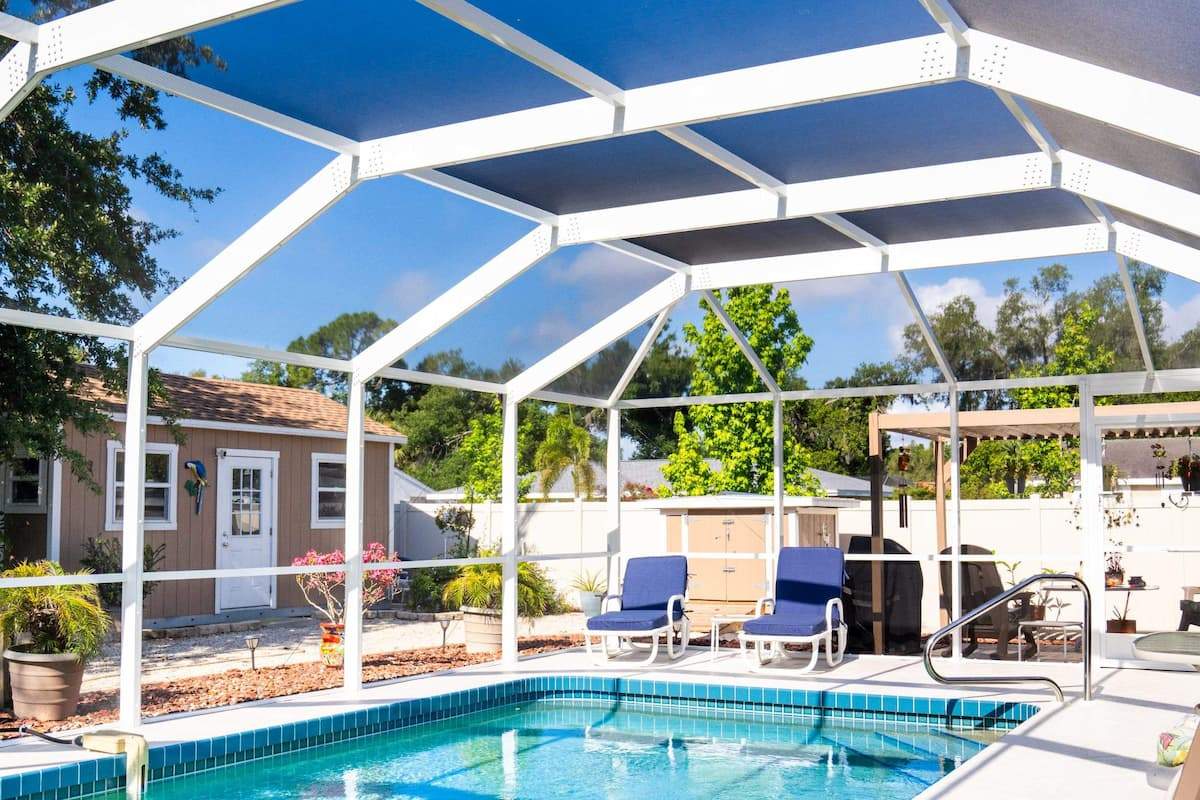
Thinking about adding a pool enclosure? Before you dive in, it helps to understand the materials that make up these structures. The right choice affects not only the look of your enclosure but also how well it stands up to Florida’s weather.
What Is a Pool Enclosure?
A pool enclosure is a framed structure that surrounds your pool area, often built from lightweight metals and screens. It provides shade, keeps bugs and debris out, and helps maintain a cleaner, safer space for swimming and relaxing.
Benefits of Having a Pool Enclosure
Pool enclosures make backyard living easier. They protect your pool from falling leaves, reduce maintenance, and keep mosquitoes away. They also add a layer of safety for kids and pets, and – thanks to their clean lines – give your backyard a more finished, high-end look.
Different Types of Materials Used for Pool Enclosures
Aluminum & Steel
Aluminum is by far the most popular choice for pool cage materials. It’s strong, rust-resistant, and lightweight, which is ideal for Florida’s humid climate. Aluminum frames hold up beautifully against rain, salt air, and high winds without warping or corroding. Steel, while extremely sturdy, can be heavy and may need extra maintenance to prevent rust in coastal areas.
Vinyl & Wood
Vinyl offers a smooth, low-maintenance finish that resists moisture and fading, though it doesn’t have the same strength as aluminum. Wood is beautiful and timeless, but requires regular sealing and upkeep to protect against insects, moisture, and sun exposure. For most Florida homeowners, wood is more aesthetic than practical.
Pros and Cons of Different Types of Materials
Each option has trade-offs:
- Aluminum is durable, easy to maintain, and ideal for long-term performance.
- Steel provides extra strength but can rust.
- Vinyl is affordable and flexible in design, but less durable under intense sun.
- Wood looks great but demands constant care.
Balancing cost, longevity, and maintenance is key to choosing the right material for your home.
Why Aluminum Pool Enclosures Are Best for Florida Weather
For Florida’s mix of heat, humidity, and hurricanes, aluminum stands above the rest. It resists corrosion, doesn’t swell or warp in high temperatures, and remains sturdy through strong winds. Aluminum is also lightweight, making installation easier and reducing structural stress. Combined with high-quality pool enclosure screen material, it delivers long-lasting protection and a clean, modern look that fits the Florida lifestyle.
Factors to Consider When Choosing the Right Material
When selecting screen enclosure materials, think about:
- Climate: Coastal humidity and salt exposure favor corrosion-resistant metals like aluminum.
- Maintenance: Some pool enclosure screen material options require more upkeep than others.
- Budget and style: Choose what fits your needs today and holds up tomorrow.
Maintenance Tips for Each Type of Material
A little maintenance keeps your enclosure strong and looking great for years:
- Aluminum: Rinse with water and mild soap to remove salt and dust buildup.
- Vinyl: Clean occasionally with gentle detergent; avoid harsh chemicals.
- Wood: Reseal regularly and inspect for termites or rot.
How to Find the Right Professional for Your Pool Enclosure Installation
Always work with a licensed, insured contractor experienced with Florida’s building codes. Local expertise matters, especially for wind-rated designs and corrosion prevention.
Contact Absolute Aluminum for Durable Pool Enclosures
At Absolute Aluminum, we’ve been designing and installing aluminum enclosures since 1988. Our team uses premium materials built for Florida’s unique climate, combining style with strength.
Ready to create a backyard that’s comfortable, protected, and built to last? Contact us today for a free consultation.